
December 23, 2022
With experience in the payments industry for over a decade, Caleb Avery was often asked to help software companies who were looking to monetize their payments. Unable to find a solution that didn’t require his clients to compromise on either technology, user experience, or economics, he decided that he needed his own solution.
That led him to build Tilled and create PayFac-as-a-Service.
Caleb first started working in the payments industry while in college, co-founding a credit card processing independent sales organization, or ISO, with a few of his friends. Beginning with very traditional credit card processing customers including restaurants, salons, liquor stores and other brick and mortar businesses, Merchant Services Done Right later expanded into processing services for e-commerce businesses, software companies and now operates in 22+ states across the country.
Over the years, he also consulted for larger software companies processing anywhere from $100 million to over a billion in annual payments volume. These clients needed a payments expert to help them negotiate agreements, develop new pricing models, and maximize their revenue from credit card processing.
It was while working with these businesses that Caleb had a realization: software companies wanting to optimize their integrated payment processing solution were really looking for two key things. One, an instant digital sign-up experience for their customers. And two, to maximize the revenue they could earn.
Tilled’s revolutionary PayFac-as-a-Service platform allows software companies to enjoy all of the benefits of becoming a PayFac without any of the upfront investment or ongoing overheads, all while capturing the lion’s share of the economics.


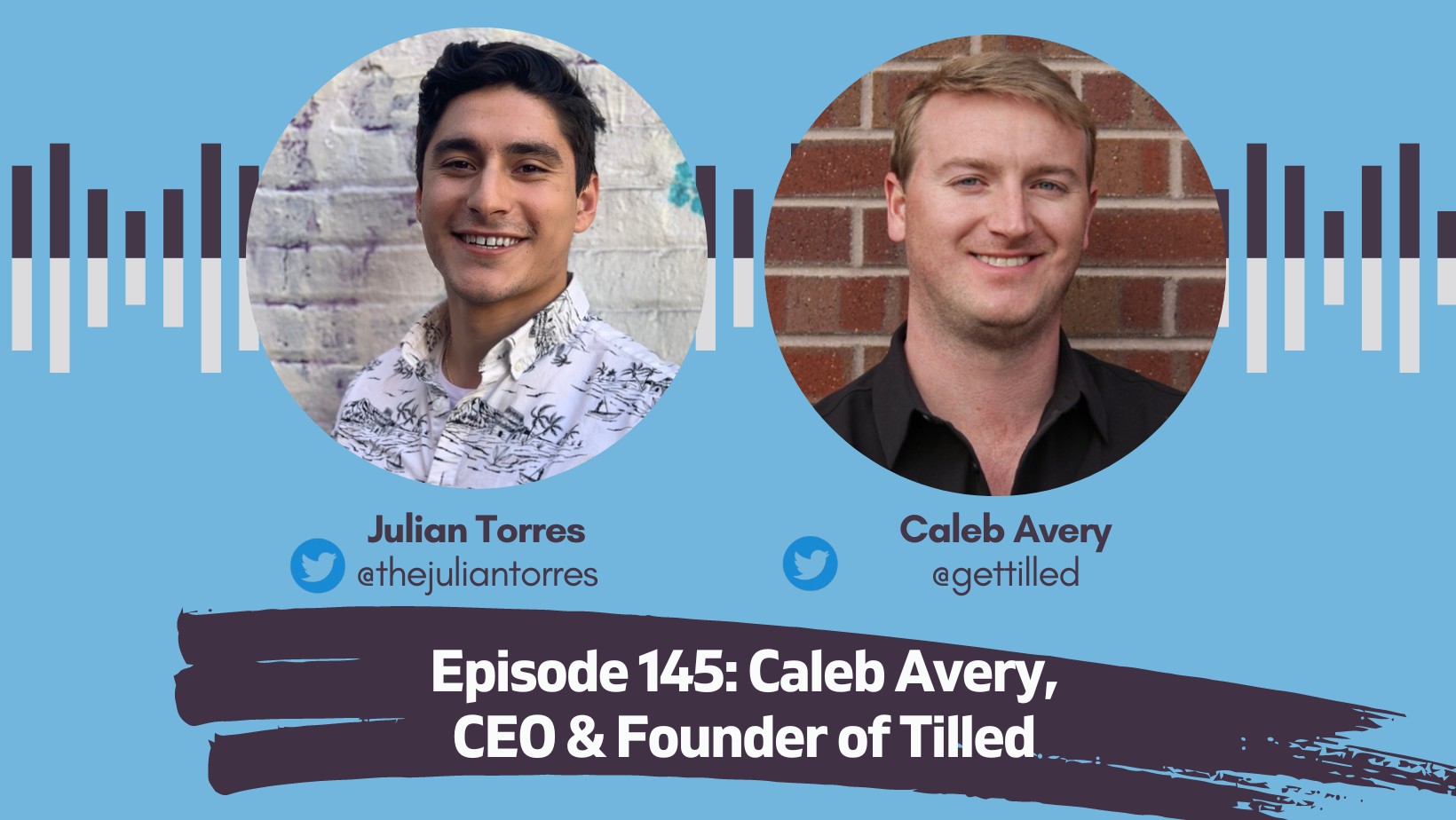
Julian: Hey everyone. Thank you so much for joining the Behind Company Lines podcast. Today we have Caleb Avery, CEO and founder of Tilled With a Revolutionary Pay F as a service approach allows their customers to enjoy all of the benefits of becoming a fully registered payment facilitator or pay FFA without any of the upfront investment or ongoing over.
Caleb, I'm so excited to chat with you and discuss not only your experience in the payment space and what that means in regards to how it affects startups and but also just as a founder and the experiences that you've had scaling and building you know, not onlyTilled but other companies prior to that.
And so really excited to get into the weeds of kind how you view your companies in building. Also product market fit and all these processes that are extremely necessary to building a company or building something that people actually want to use. Cause I think we all have great ideas, but sometimes, you know, the execution of that I, I think is where a lot of the creativity comes from.
But before we get into all that good stuff, what were you doing before you started Tilled?
Caleb: Yeah, well, appreciate you having me on the show today. You know, prior to till, my entire background has really been in the payment space. So I started at 19 years. Going door to door selling payment processing services to small business owners.
Scaled that up over, over time. And then I started consulting for software companies. And so, I consulted for a fair number of software businesses over the last kind of 5, 5, 6 years. And for me, I continued to see these same problems over and over again, where these vertical software businesses really wanted to figure out how to monetize all of these payments.
That were flowing through their platform, but they just didn't like the options that were available to them, whether it was the economics of Stripe or the technology available through some of the other providers. And so eventually felt like there was an opportunity to go build out, you know, a new business that becameTilled.
Julian: Yeah, it's fascinating just the founders stories and you're not the first founder that's gone door to door and really kind of cut their teeth into learning. I think, well, I guess, I guess question for you is what did you learn in that process and what, in that journey of uncovering what customers want helps or has continued to help you?
Now not only withTilled but also with consulting other companies. You know, how do you go through identifying what customer needs are? What are the questions are you asking and what's the process behind, you know, getting to know that and how do you find solutions around what their problem? On.
Caleb: Yeah, absolutely. I mean, d door-to-door sales is kind of jumping right into the deep end there at 19. And so it, it teaches you a lot a about people, about the needs of the merchants, about the payment space. But you also learn a lot about rejection. You know, the reality of going, you know, door-to-door selling merchant services.
You know, you might walk into 20, 25 businesses and 20 of those businesses are, you know, angry that you're walking in the door. And so, you know, you learn to kind of build up that, that thick scan and understand that like, it's okay to get a no, you actually wanna push, you know, towards that.
No, and I feel like, you know, when that transitions into kind of my role founder, you know, CEO here at Til, I'm doing sales, I'm doing fundraising, I'm doing recruiting, and there's a ton of reject. You know, that happens, you know, throughout that process. Thi this calendar, you're alone. We just did the numbers took 563 investor meetings and the number of investors that passed is pretty you know, insane.
And so it's just a ton of rejection, but you have to look at that as just a healthy part of the process and be able to, you know, understand that it's not personal. And that's just a natural part of the process.
Julian: Yeah, for, for founders out there kind of going through a similar fundraising process, so I feel like it never stops for companies you know, once, yeah, once you raise once and you kind of continue that and as you grow on scale, but, You know, through those conversations that you're having, you know, for the founders out there in the process now, what are the elements that you know that, that are important when you're talking with companies are is it timing?
Is it the pitch? Is it finding out exactly how the relationship will match? I'm sure some of those no's came from your end as well because it's extremely important to work with the right partners. But what are the elements that are I. That you've seen, you know, now having done it a few times and more than a few,
Caleb: Yeah I've raised several rounds of funding here at, at Tilled, and I've also invested in about 25 startups myself.
And so I've kind of seen it from both sides of the table. And there, there's some things with fundraising that are kind of consistent throughout the journey at different stages. But there are also some things that are more unique to, to earlier stage and then later stage. You know, fundraising where when you're in the earlier stages, and I see founders make this mistake a lot where they really underestimate how much the investors are indexing on you, the founder.
So if you're not helping the investors understand who you are. Your background and why you're excited to, to build, you know, the business that you're building, it's gonna be very difficult to get investment in that early days when you've got a pitch deck, maybe a website, maybe an ugly, you know, MVP version of the product.
But they're really betting on you and the team and the vision. You know, that you have for the organization. And so what that leads to is this idea of storytelling. And so, you know, in the early days it's really this idea of selling the vision for where you want to go, you know, with the business.
And then over time is you actually have traction and data and numbers, you know, to share. It's how you weave, you know, those, that data. into the story yeah. That, that you're telling but really to, to me, fundraising is really all about, you know, that vision and that story that you're able to tell and then start backing that up with hard data as you scale.
Julian: Yeah. What what's your process like now for fundraising? Do you have a list and do you kind of foster that list of investors and look for new connections? Is that kind of how the process starts and initiates and then you kind of trickle down conversations?
Caleb: we frankly, have been pretty fortunate that we've had just a tremendous amount of inbound. From investors. And so for me may maybe unusually a big part of my process is actually just sharing updates on LinkedIn where a lot of investors are just following along with the journey and how we're growing and how we're building and, you know, sometimes the struggles that we're facing.
And that's been a big part of it. And then just setting regular communication cadences so you know every quarter or two catching up with the investors that, that you're excited about and that you want to build. that, that relationship with where you, you mentioned it earlier, fundraising is this continual process.
And I think if you're a founder and you're thinking like, Hey, I'm not gonna talk to investors for the next nine to 12 months, and then when I need to go raise money, I'm just gonna go out, you know, and raise it in three months maybe last year you know, you could do that. Whereas now it, it really is about building, you know, that relationship and having those reg regular touchpoint.
You know, build that connection with those investors because it's really a two way vetting process. Like, you know, certainly, you know, you want investors to be excited about investing in your business, but at least for me, I've really prioritized looking for investors that, you know, are culture fit.
For me and for Tilled. And are excited about, you know, the mission and the vision Yeah. You know, behind the organization. And so for me, that aspect of relationship building over sometimes a long period of time is just an incredibly valuable part of the process. .
Julian: What's something that, that you do regularly? I know one founder mentioned that they they'll continue to like, send newsletter updates and then continue to kind of keep that investment community you know, informed with the progress. Is that something that you in incorporate and what can founders do better to keep their investor pool?
Caleb: I guess up to date is a good word. Yeah, I mean, cer certainly investor updates. I mean, if you're not sending investor updates to your current investors, that's a huge missed opportunity to stay, you know, top of mind with current investors. But it can also be, you know, a great opportunity to keep, you know, other potential investors, you know, up to date on what you're doing.
I tend to prefer just regular catch up calls with folks. and then really, you know, when I'm going to, to conferences reaching out and seeing, you know, what investors are gonna be attending, you know, those conferences. And for me at least, money 2020 has really been, you know, the kind of mecca where, you know, almost every, you know, VC out there is going to, to money 2020.
And so I line up, you know, three or four days of all day meetings to, to try and build that in-person relationship. Cuz as nice as Zoom is as nice as, you know, a newsletter update. Getting to spend that time in person is just incredibly valuable.
Julian: Yeah. Yeah. Describe the, you know, not only the technology behindTilled but also the problem that you're, you know, passionate about solving and that is, is so prevalent within what you've seen with a lot of companies in the payment space.
Caleb: Yeah, so the big problem that, that we're solving for is this idea that the vertical software platforms want to be able to monetize the payments going through their platform. And so I saw this as a consultant where I was working with, you know, dental software platforms, golf course management platforms, and they were tired of just passing along the 2.9% and 30 cents from Stripe or Braintree onto their customers.
And they really wanted to get into that revenue stream and start earning revenue off of all of the. I thought were flowing through their platform and you know, originally I was connecting them to legacy gateways like an NMI or an authorized.net, and then helping them negotiate referral agreements with the big processors and that legacy technology, coupled with this manual PDF merchant onboarding process was not the clean experience of these software companies, you know, we're looking for.
And so, , one of the, one of my clients really got enamored by this idea of becoming a pay ffa. Yeah. But they actually knew nothing about what it meant to be a pay ffa. And historically that was like a two year multi-million dollar process. And so the core idea behindTilled and pay FFA as a service is that we took that two year multi-million dollar process, and now we've had a company launched as little as four days on our platform.
Wow. And so they're able to take advantage of all of those benefits of the payment facilitator. But they can get up and running in a matter of weeks without building out a team, without taking on liability. But we're still paying them the lion share of the revenue on all of the transactions flowing through their platform.
Julian: Incredible. So essentially describe the mechanics behind it. So a company uses the technology to become a payment fa facilitator. What's involved in that? And also how are they helping? Or excuse me, how are they using in, in that income to monetize? When you say monetize I feel like most people think about, you know, launching products or finding different revenue streams.
How are you incorporating this technology to help them monetize on payments?
Caleb: Yeah, so, so two quick things there. One, just a nuance that our partners our software platforms are not becoming registered pay fax. That's why we're able to get them up and running. You know, four days, two, three weeks instead of, you know, 12, 24 months.
And so that's just an important distinction in terms of, you know, how they're able to leverage the platform. We really view ourselves as this turnkey white label payments infrastructure. And so they're integrating. , they're integrating into the api. And then they're able to leverage a lot of our turnkey white label tools.
And so they've got white label merchant onboarding tools. They've got white label reporting portals and how they actually monetize the payments. So if we take, you know, that golf course management platform that let's say has, you know, 500 golf courses on their platform previously, if they're working with Stripe, they were just passing along the 2.9.
and 30 cents from Stripe onto the golf course, and there was no margin opportunity for the software platform. But the reality is it typically only costs like 2.2% to actually process those transactions. And so normally there's about 80 basis points, or, you know, almost 1% of margin available for, you know, the transactions that are being processed.
And at Tilled we share at least 66% of that revenue back to our software partners. And so the majority of our software companies are making more than half a percent a. On every dollar that's processed through their platform, which can turn into a pretty incredible revenue stream very quickly. You know, where some of our partners are more than doubling their margins by embedding payments and partnering with Tilled.
Julian: It's incredible to see how, you know, technology kind of, it helps not only, you know, facilitate more quick and efficient processes, but also benefit a lot of customers. And and I feel like a lot of that is also when you're disrupting an incumbent, which it sounds like, you know, till is definitely a company that's doing that.
What in terms of the education you have to involve with your customers and your partner. How much do you kind of focus on education describing the problem and describing how your solution kind of, is using, you know, kind of an not a legacy system, but a system that's been around for a while but then kind of switching you know, the ability to actually monetize.
How much time do you spend on like educating your customers and your partners?
Caleb: It's just an absolute core focus for us, you know, here at Tilled. And so, you know, one, we take a consultative. Approach. And then two, you know, our marketing strategy is really content marketing approach.
And so when it comes to, you know, the content marketing strategy, kind of how we get, you know, people in the door, we spend a ton of time, you know, developing thought leadership content be it, you know, blogs, long form content pieces podcasts like, like this. And for. us What we're finding is that consistently our customers before they ever actually get in touch with our sales teams, have actually done quite a bit of research until on our competitors, on the space in general.
And so for us, we spend a lot of time thinking about the messaging the positioning, kind of where we fit. Into the ecosystem, what our, you know, competitive differentiators are, what are the unique, you know, aspects about till that, that make us hyper-competitive you know, in, in this market.
And so for us, that content marketing strategy is just an absolutely fundamental part of our strategy. And I think in the B2B segment, more and more companies should really, you know, think about that content marketing you know, strategy as a way to get, you know, more educat. Inbound leads coming in, and then that consultative selling approach once the customers actually come, you know, and inbound to, to us we're not really selling them.
We're trying to figure out like, what problems are you facing in your business and isTilled actually really the right person to solve that problem for you? And sometimes the answer is yes. Sometimes the answer you know, is no. But we're really trying to get a deep understanding of the problems, you know, that our potential partners are facing, and then really figure out if we're the right.
For them, and if not point, point them in the right direction, but provide value and provide education, you know, all the way through that journey.
Julian: Yeah. What are some some things that haven't worked with content marketing? And then what, what's been kind of a core focus? Is it volume? Is it specialized information?
Is it all the above? But curious on what, what hasn't worked and what the focus has been.
Caleb: Yeah. What hasn't worked with content marketing? I think one of the things that, that we realized pretty early on that, that was surprising was how much more impact my personal LinkedIn was able to get versus like the Tilled company.
Page. Yeah. And that just was something that wasn't, you know, immediately intuitive you know, to, to us. But I mean, we've been building up, you know, both of those pages and kind of relatively speaking, I've got, you know, 12,000 plus, you know, connections until the company has like 3000 plus connections.
So just the pace of growth, that has been pretty dramatically you know, different, I don't know what the LinkedIn algorithm's doing, prioritizing kind of person. You know, content over, over corporate content, but at least for us, that's kind of what we're, you know, consistently seeing and.
you know, what's really worked for us? I think for me personally alongside the thought leadership content and the blogs and the podcast and kind of the heavy hitting, you know, nerdy payments content. I think people also appreciate kind of getting to know me, you know, a, as a person.
I, I really would highly recommend that more founders think about building up that personal brand. For them because it, it pays tremendous dividends, both, you know, for the company that, that you're building now, companies that you may build, you know, in the future. And it's also just a, for me, it's been a great habit to, to just get, you know, into this habit of, you know, build, building out in public and kind of sharing.
You know, the sharing the wins, sharing the losses, sharing the struggles, you know, out there in, in public. And it's just been a fun, you know, experience for me, just sharing the journey of building till, you know, over the last couple of years and kind of having people follow along online.
Julian: Yeah. Yeah. As a founder, I'm someone that, that overthinks a lot of the content that I'm pushing out or questions that I'm asking and , you know, things like that. But where would you start, if I was a founder, say, okay, I'm gonna focus on my personal brand. Do I talk about the space I'm working in?
Do I talk about my personal journey? Do I, you know, discuss mentors? I've spoken with, What in particular has been helpful for you to focus on? I'm sure you've gone through a few different iterations on content and then pushing stuff out, but what's been helpful as a founder, or what advice would you give another founder who wants to reinvest in their personal brand?
Caleb: Yeah. Great. Great question. I mean, the reality is that the hardest part is getting started. And for me it was the same way, you know, when I was first starting to, to think about engaging on LinkedIn, like it wasn't comfortable, it wasn't natural, it wasn't really kind of how, you know, I really, you know, wanted to operate.
But I was seeing a lot of other, you know, founders and companies that, that were. You know, success. And at that point it was early on in Covid and I was like, you know, what do I have to lose? We're, you know, kind of struggling to, to get the word out there any other way. Conferences are shut down.
You can't go meet people in person, you know, let's try this LinkedIn thing. And for me, It started out very slow, started out very gradual, and I started initially just by engaging with other people's content. So it wasn't like, you know, day one I'm putting out these amazing posts and recording podcasts.
Like that was not in, in any way, kind of, even really the first, you know, nine, 12 months of, you know, me putting myself out there on, on LinkedIn. It started with engaging with other people's content, leaving thoughtful comments or re-sharing, you know, posts or articles that, that I thought that were interesting with a little bit, you know, of my own you know, thoughts and.
I hired a ghost writer. And for me that, that was just the best decision, you know, that I could have made. Cuz I I'm not great at sitting down and, you know, cranking out a paper. I struggle with it in school, I struggle with it, you know, today. And I just recognize that weakness. And so I brought in a ghost writer to help write, you know, more of that content for me.
So that. You know, I could do kind of the part that I wanted, which was just kind of talk about topics that were interesting, you know, to me. And then she could actually turn that into an organized blog that was worth, you know, people taking the time to read. And so that was kind of where we started you know, putting out content.
Yeah. As you said, it kind of evolved over time and we started to learn, you know, what worked, what didn't work what did people really enjoy, you know, hearing more of. just learning and iterating over, over time. But it started slow and then ,, then it builds.
Julian: Yeah. Yeah. What other platforms do you use in terms of content distribution?
Are you using like, you know, TikTok, Instagram, or are you on other things, or is it mainly LinkedIn?
Caleb: I'm a LinkedIn Through and through our content team set me up a Twitter and I've yet to personally put out a tweet on there. They're occasionally putting stuff out there for me, but I've just never been a big social media guy.
I, I haven't been on Facebook and probably, I don't know, 10, 15 years at this point. And LinkedIn's really the place that, that I, you know, spend my time. I also feel like it's where our customers and our partners, you know, are hanging out. At least for us, you know, we're in a B2B setting and so I, I personally don't feel like TikTok and, you know, Instagram are necessarily the right place for us to go find you know, our audience.
But it doesn't mean for other people they can't find a ton of success on other platform. . Yeah.
Julian: Tell us a little bit about the traction. Obviously, you know, Tilda has been, you know, around for quite a bit now, I think, what, four or five years. What's exciting about the more recent success and the traction that you've, we've talked a little bit earlier before the show about, you know, for some reason this was a booming month for you, which is fantastic.
What has been the attribution or what has been, I guess, the reason for the success and what are you excited about coming in the next.
Caleb: Yeah, so we, we started building this out in, in January of 2019. So kind of almost four years into the journey, you know, at this point. But the reality is it's just this incredibly slow ramp and then it starts to, to take off, which is exciting, and I feel like we're kind of right at that inflection point.
In the business, which is super exciting. And so, you know, as you mentioned you know, we've seen a ton of success here in the first couple weeks of December, which I never would've predicted. I feel like generally December is just such a slow time in the payment space.
But, you know, at this point,Tilled has 68 software companies that we partner with. But we've signed 10 in the last two weeks which is just absolutely nuts. And for me, you know, when I. kind of reasons why we're seeing, you know, that acceleration of the traction on the platform to, to me, you know, I think about this idea of concept market fit versus product market fit.
And I, I feel like for the longest time we've really had tremendous concept market fit where cus companies and customers are incredibly excited about the idea of pay FFA as service. The idea of our business model, the idea of the product, and I feel like where we're. To go is seeing this just incredible inflection in the business where we're really transitioning into that true product market fit, where, you know, the companies on the platform are happy.
They're starting to refer, you know, other people to us. Word of mouth is getting out the inbound is ramping up. We're signing referral partners every other day. And so we're just. Seeing this acceleration happening, and I think some of it is, know,Tilled the brand getting more mature.
Some of it'sTilled the product, you know, getting more mature and just ready to handle, you know, more use cases. , but I also feel like a lot of this is the macroeconomic environment I is really shifting in our favor. Yeah. And for me, you know, when I look kind of high level last year when capital was darn near free and it was growth at all costs.
You know, software companies were focused on just acquiring as many customers. As they could. They weren't really looking at margins, they weren't really looking at profitability. They didn't really care quite as much about adding additional revenue streams. Some did, but it wasn't the core focus for the majority of companies.
Whereas now, you know, we're kind of deep into, you know, the funding freeze where it's just tough to come by, you know, new venture funding and I don't know that next year is gonna be all that much better. And so you're seeing more and more investors and boards and management teams that are looking at their kind of projections for next year.
they have to figure out how to improve their margins. They have to figure out how to add additional revenue. Into the business and get their R up so that they can raise, you know, that next round of capital. And I really believe that Tilled and our, you know, payment monetization angle can be an incredibly lucrative and beneficial path for these software companies to take.
And I think we're starting to see that. In our traction over the last few months.
Julian: Incredible. And so exciting. You know, how I'm excited by the idea of companies just building smarter and really focusing on what is gonna lead them to long-term success. And not as a fluff term, but mainly just making intelligent decisions.
Knowing where their spend is, knowing where, knowing more about what it takes, you know, their cac, you know, and acquiring new customers. It's exciting to see, I think founders become, I don't wanna say more refined, but it. Hyper-focused on building really holistic business and business model, which is, you know, I think more and more you know, appreciated by the success of a lot of smaller companies and not only now, but in the future.
What are some of the biggest risks that Tilled face today?
Caleb: Yeah. So, you know, I look at kind of some of the risks that, that we've seen over the course of the year. I mean, I think for us fast growth you know, when you talk about problems there's good problems and , you know, there's bad problems, but they're problems.
None the last. And I think for us, you know, as the year started, we were seeing just frankly, more, more inbound interest than we were really set up to handle from a staffing perspective, from a process perspective, from a product perspective. And. , we really spent the first half of this year focused on refining our processes, building out the team and making sure that, you know, the product and the infrastructure that we had in place was really gonna be able to scale you know, with the customers, you know, at the pace that we were signing up you know, new clients.
And so for us, you know, that was a big worry kind of first half of this year. And we've been able to work through you know, that one I also. For us we've seen, you know, a ton of benefit of being a remote first organization, but there's times where you go through, you know, these challenging periods.
And for me the challenges have been more on the cultural side of things where, you know, it's a lot easier to build up, you know, comradery when you're in the office, when you're, you know, high fiving, you're all, you know, together in person. Whereas for us, . We started 2021 with five people on the team, and we've got something like 63 people on the team.
Wow. You know, today. And so that's just an incredible, you know, pace of growth. But trying to maintain, you know, the culture that we want in the organization, building remote first and growing at that sort of pace is a big challenge. .
Julian: Yeah. What are some ways that you kind of continue to foster culture and some, you know, one thing we do as a company is have, you know, standups and we kind of always reinvest in, you know, our values. And in having conversations around what that means, obviously it's hard to meet up in person, you know, as a fully dispersed team. But what are some cool and creative and fun ways that you continue to engage and foster the culture of, of. .
Caleb: Yeah. I feel like whenever you're building in a remote first environment, especially as the team scales, you just have to be more intentional about, you know, how do you want to build the culture?
What is the culture, you know, that you want to build? And for us, yeah, it starts with the mission, the vision, the values of the organization. Just continuing to reinforce those every, all hands, every time. You know, we all get together, employee onboarding and just really enfor. You know, that, that mission, the vision, the values, you know, of the organization.
I think for us as well you know, we're doing at least on a monthly basis, getting the entire team together on, on Zoom, sometimes more frequently for happy hours. We've got a fun committee that organizes, you know, some cool events. And so, you know, even though we're remote, it doesn't mean that we can't all have fun, you know, to together.
And so just trying to have, you know, that fun you know, side of building a business, cuz there's always gonna be stress. But it also should be fun. And then we recently actually did get the entire company together in person here in, in Colorado, which was just an absolutely phenomenal experience.
And it's certainly cost prohibitive. So you can't do it, you know, all the time. Can't do it every week. But as much as you're able. I just highly recommend getting as much of the team together, you know, as you can in, in person because you just can't beat that, that in-person collaboration and that in-person relationship building.
Julian: Yeah. Yeah. It's awesome to, to see companies focusing on, you know, reinvesting in, in the culture and I think it creates kind of, this long-term success. And once everyone's aligned and you can kind of reinvigorate the motivation in times where things maybe seem a little. I don't wanna say bleak, but more challenging than others.
If everything goes well, what's the long term vision for Tilled
Caleb: Yeah. So for me, I always tied back to the mission. And so for us our mission is to empower. ISVs to, to monetize their payments. But the second part of that mission statement is changing the payments landscape for the better.
And so for me, you know, if we're successful over the long term, you know, we will have some, a meaningful impact on the payment space. You know, changing that for the better. And for me, it's really about the ethos of how we approach, you know, our relationships. You know, our employees, our partners, their customers, investors just really, you know, doing right.
By as many stakeholders as we can. And it's not kind of, you know, growth at all costs,Tilled Tilled must you know, succeed. It's really looking at kind of how can we all win you know, together, which is unfortunately not the prevalent a approach by, you know, a lot of the companies in our space.
Julian: Yeah. If you weren't working onTilled what would you be doing?
Caleb: If I wasn't working on Tilled, what would I be doing? I mean, prior to this I was really enjoying the consulting work that I was doing, getting to invest in, in startups. And it's certainly a lot less stress when it's not, you know, your business you know, on, on the line, your employees, your payroll you know, to make.
And so I could certainly see, you know, a world where I was, you know, continuing to. You know, software companies and continuing to invest in, in startups and just getting to follow, you know, other founders in their journey and help, you know, however I could.
Julian: I love that. I love that. What's particularly hard about your job?
Caleb: I feel like for me, you know, one of the hardest things over the course of this year has been working on this transition from being, you know, a founder to, to really transitioning into a ceo. Role where, you know the organization scaled tremendously or customer base has scaled, you know, tremendously.
We, we've raised, you know, quite a bit of capital and for me, you know, the job and the responsibilities that are required of me today versus what was required for me 12, 18, 24 months ago looks, you know, pretty different. Yeah. And so for. , it's really challenging myself to have the personal growth to be able to meet the demands of what Tilled actually needs from me, you know, as the business scales.
Julian: Yeah, It's been, I think we can go to, through so many different rabbit holes and I'm excited to not only, you know, learn about your experience and your background, how you view building and this inflection point. It's, it is exciting to see where Children's gonna go. And I always like to ask this next question, not from a company perspective, but from a founder perspective.
You know, whether it's early in your career or now, what books or people have influenced you?
Caleb: I recently was rereading Peter Teals zero to one. And for me that just, I feel like. You know, a book that, that I just continued to go back to. And it's this idea that if you really want to build something, you know, transformational, you can't just have kind of a mi iteration on an existing model or an existing business.
You really have to focus on building something, you know, entirely new. And I think for me, you know, we took that to heart. I mean, the idea of pay FFA as a service is a concept that did not exist before. You know, we. And so to, to me, the idea that we came in and created a category is something that's, you know, incredibly exciting.
There. There's now, you know, a number of competitors that have kind of slapped that on the side of their bus. And so pay f as a service means different things, you know, to, to different people. But I take a lot of pride in the fact that it was really, you know, our idea and we really created the category you know, that we're now.
Julian: Amazing. Amazing. Well, I know we're at the end of the show here, Caleb, and in, and I, like I said, I, we can go through so many different rabbit holes and we might have to do a second episode just to incorporate more of not only your experience, but your thoughts and how you view building. But I always like to give our founders a chance and our guests a chance to give us your plugs.
So tell us where we can find you, where we can support the product, and if I'm a potential customer where I can get involved. What are your websites LinkedIn since Twitter's not that active. Maybe we'll leave that one out, but where can we find Jen be a. It.
Caleb: Yeah. So if you wanna follow me, me personally, Caleb Avery.
LinkedIn is certainly a fantastic place to go Tilled the company's also very active on LinkedIn. Our website is just a fantastic resource. Check out the blog page. Uh, Tilled is t i l l. Ed, so, so check out tilled.com if you wanna learn more and reach out if you're interested in you know, monetizing your payments or being a referral partner to help other software companies.
But Julian, really appreciate you having me on the podcast today. Awesome experience. And if we wanna do round two I'm totally game.
Julian: I love that. Well, I hope you enjoyed yourself and thank you again for being on the show. Appreciate it.


